Click a plate to inspect it at full size. Page 09 shows two licensed real-photo materials through offset, quilt, selective mirror, and shape priors; page 10 recombines the same method across two licensed scenes as WIP; see source credits. Download all twelve for upload.
 01-cover-roboto.jpgArgus turns photographs into inspectable 3D and reusable textures, with each result tied to its source and report.
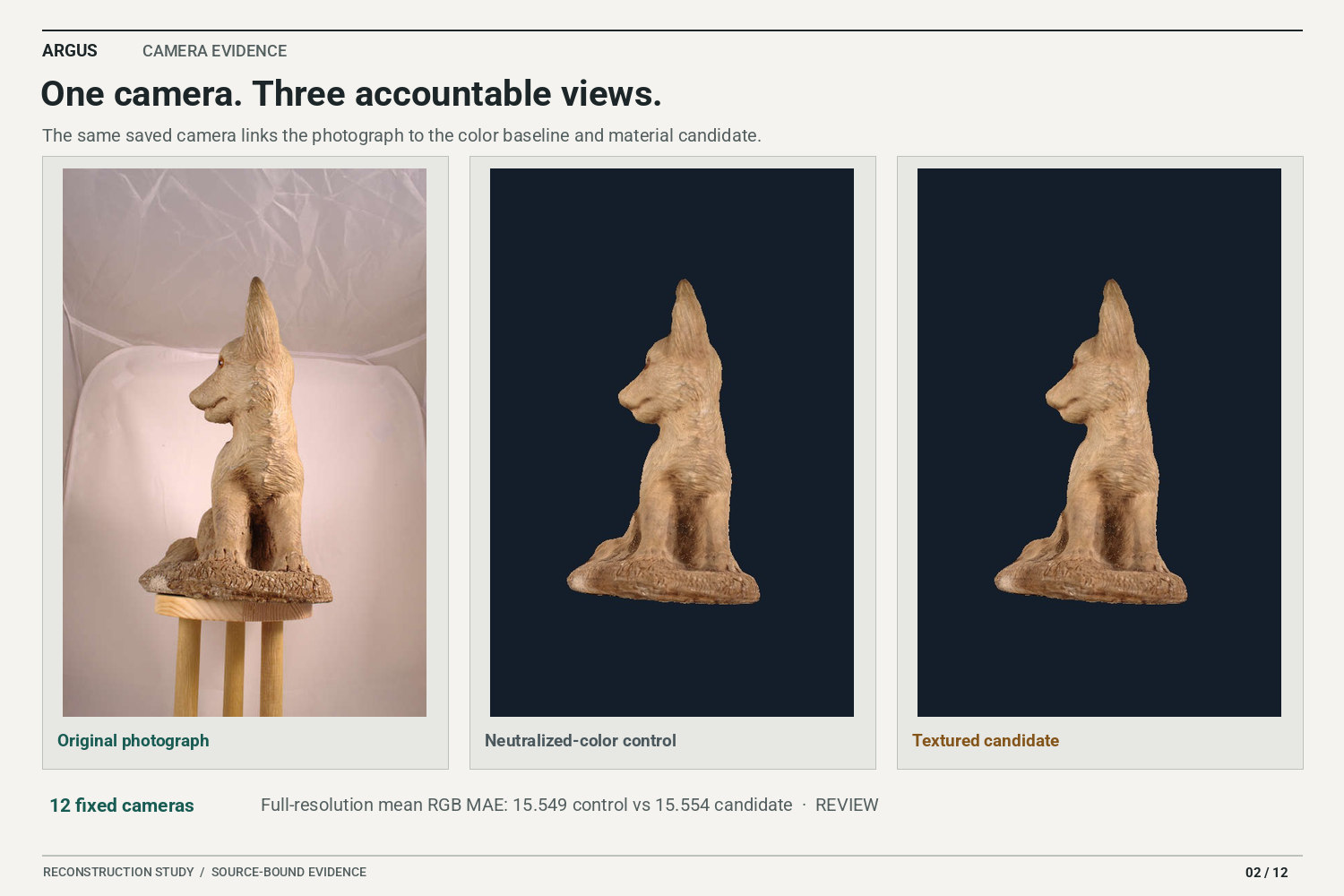 02-camera-comparison-roboto.jpgCamera-matched renders sit beside the original photos so alignment, contour, and color errors stay visible.
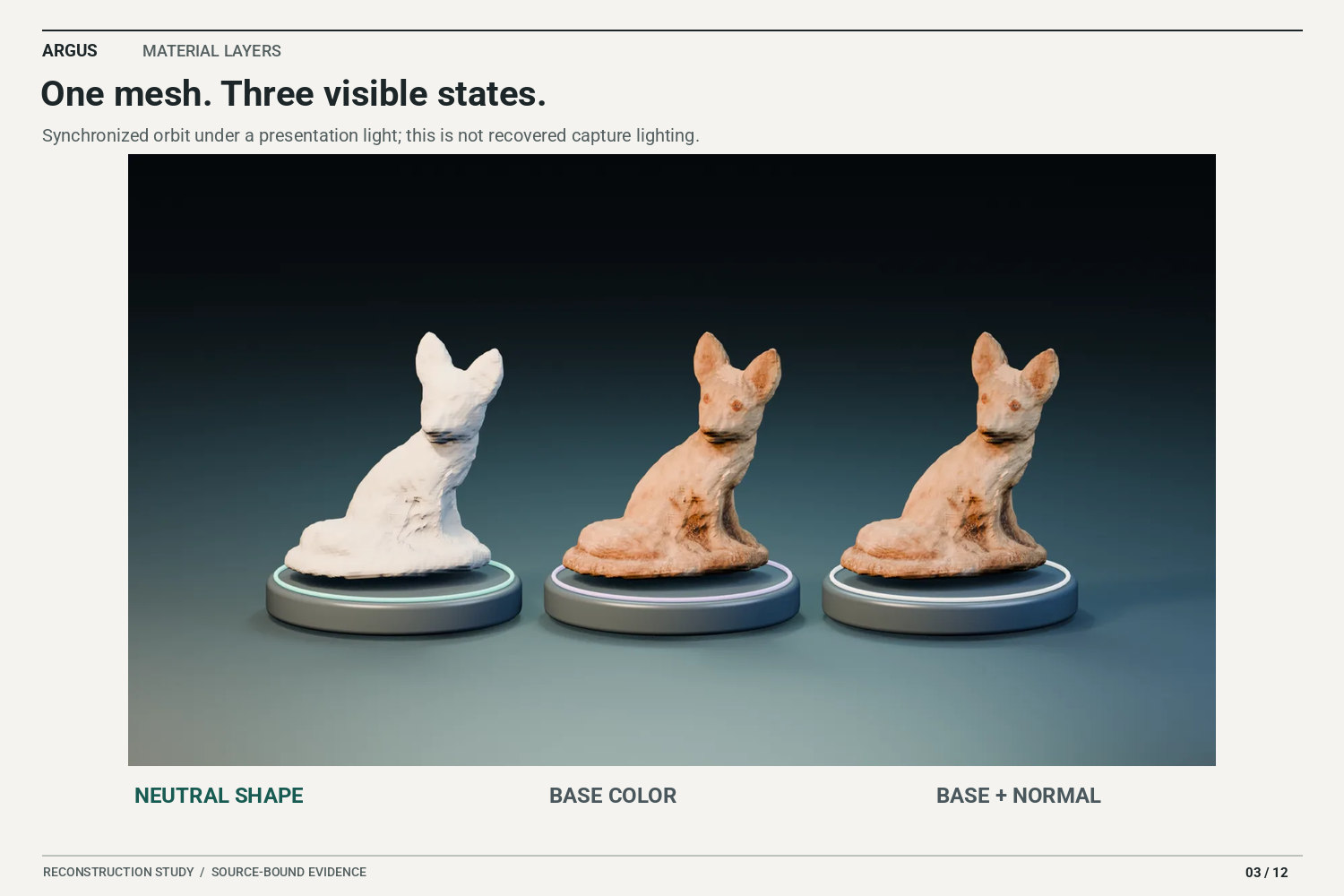 03-showroom-roboto.jpgOne fox mesh under display lights: neutral shape, base color, and base color with normal detail.
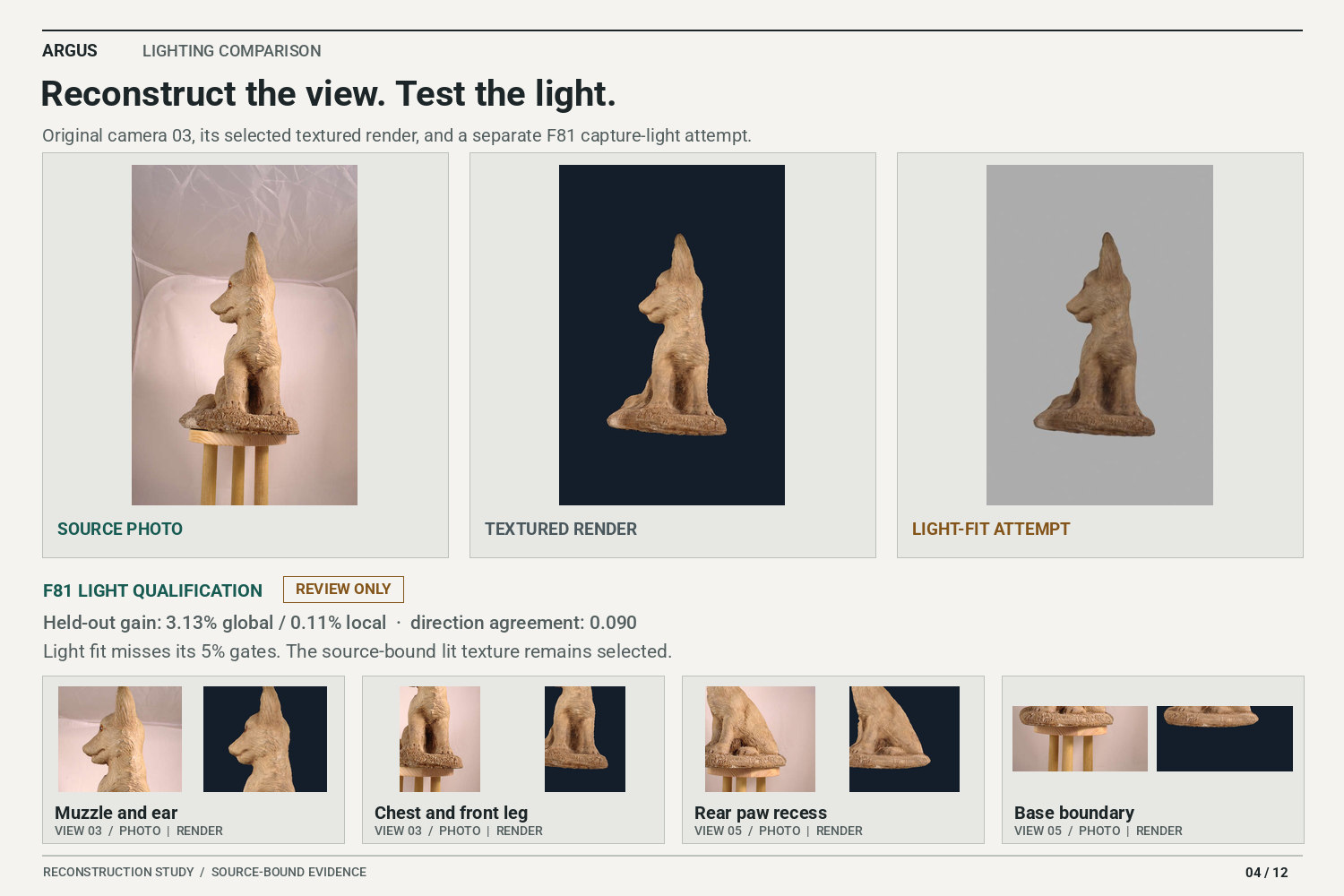 04-reconstruction-lighting.jpgLighting reconstruction is in review; this plate separates the fitted light from material color.
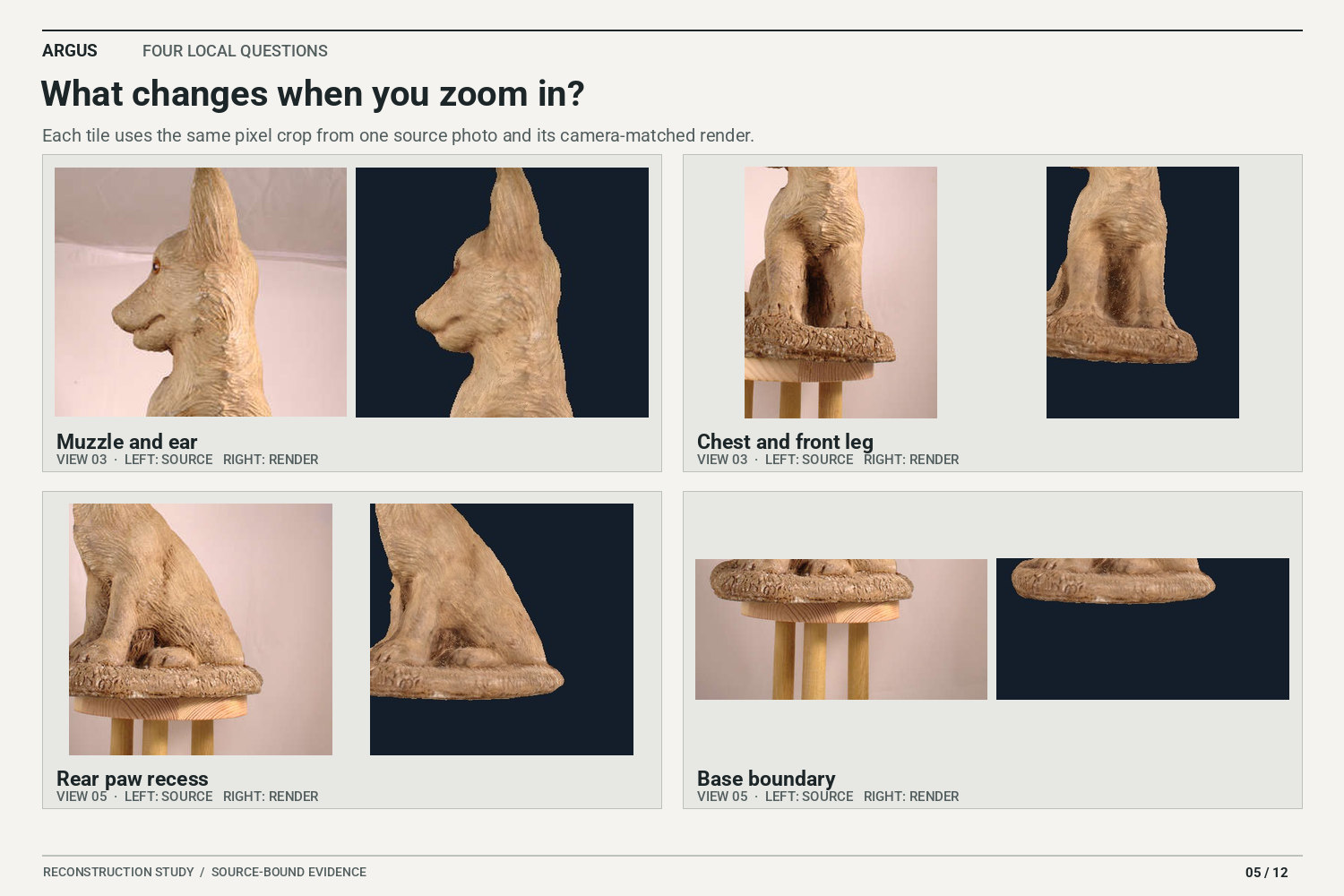 05-zoom-examples.jpgClose crops reveal paw clefts, the under-chest valley, and rear-leg transitions that still need correction.
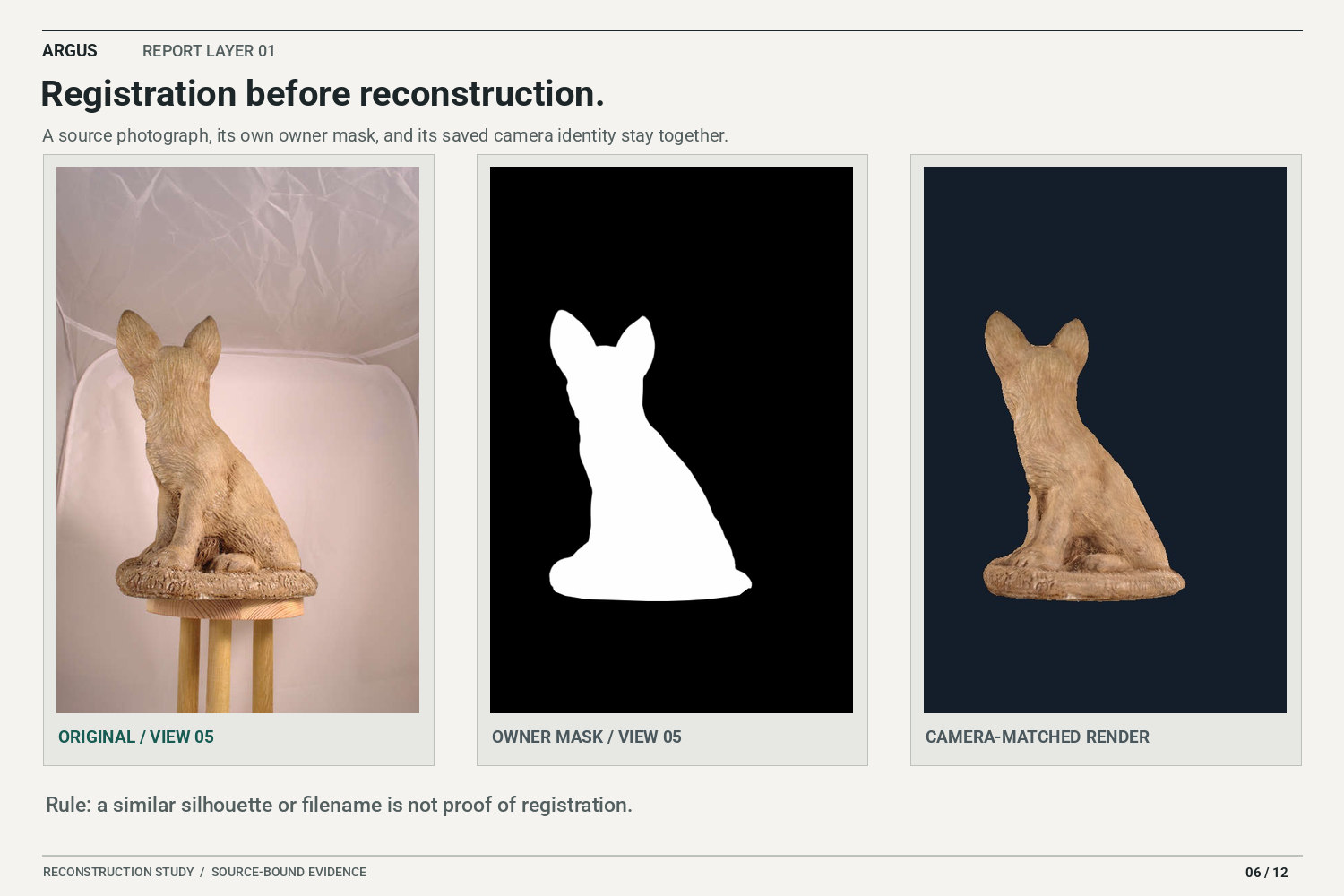 06-report-source.jpgEach photo keeps its own camera, mask, and pixel ownership so background leakage can be found.
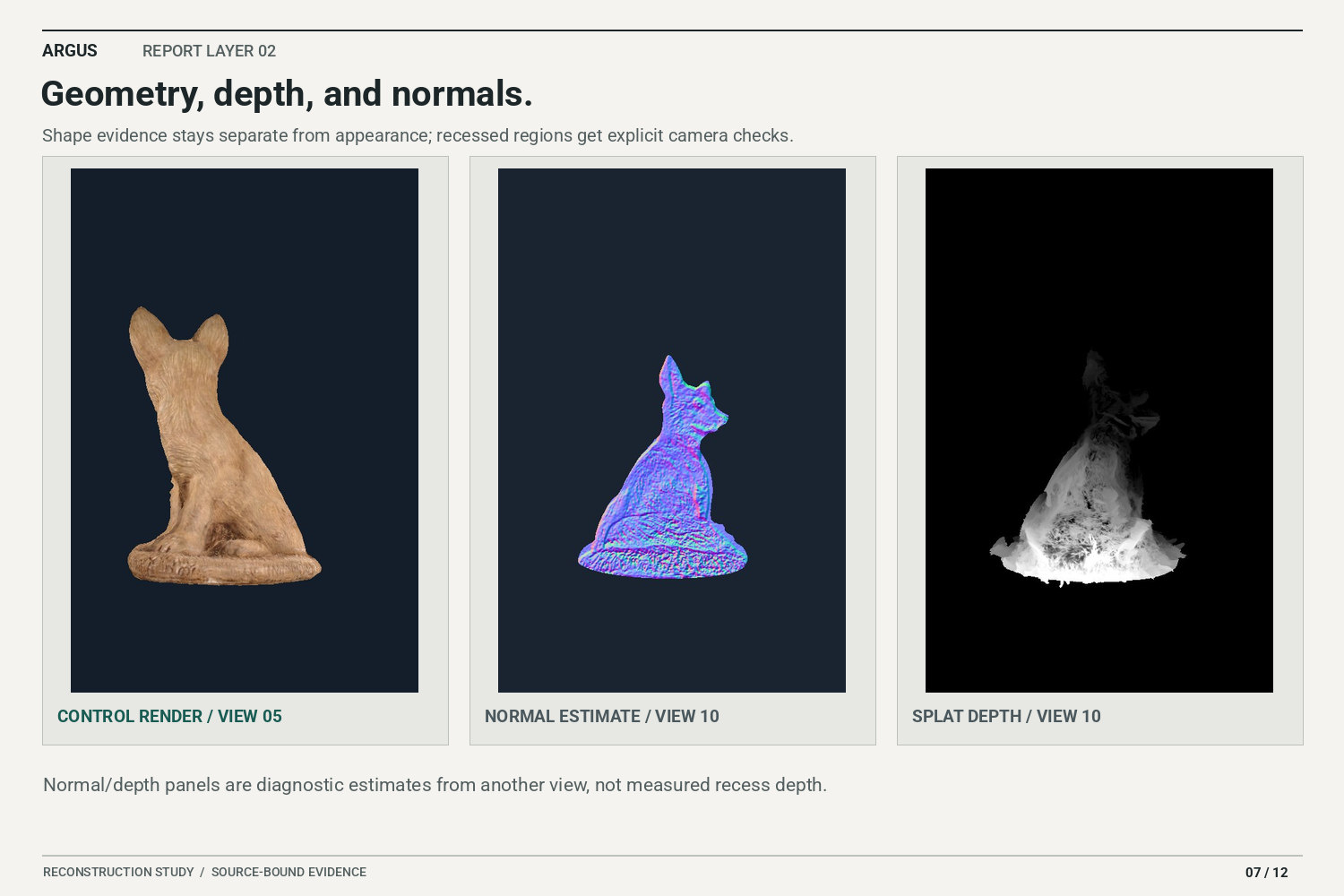 07-report-geometry.jpgGeometry is checked through the saved control renders, including the recessed areas that remain under review.
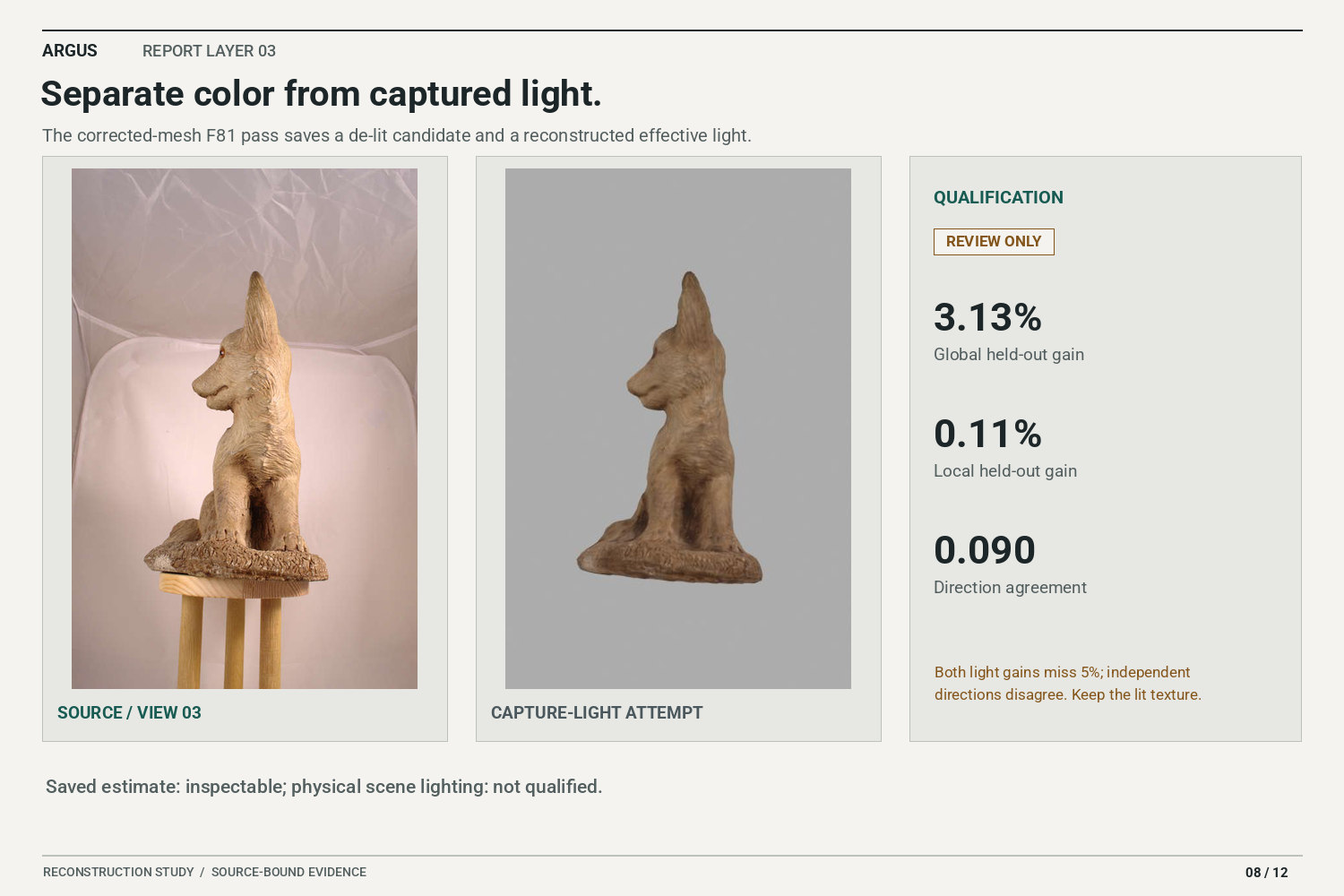 08-report-lighting.jpgMatched lighting tests ask whether neutralized texture and recovered illumination explain the source photo.
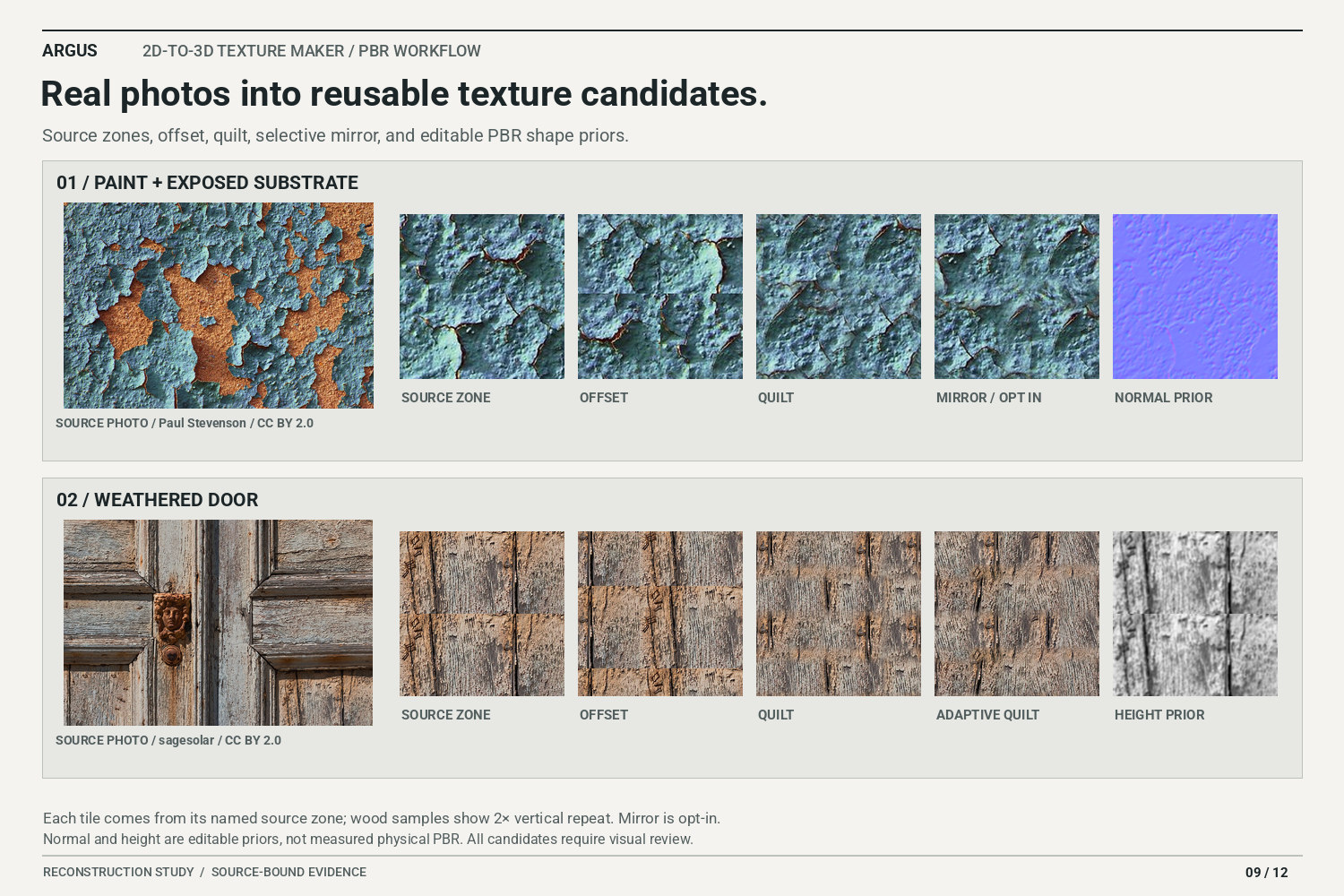 09-material-extraction-and-controls.jpgTwo licensed photos become texture candidates through offset, quilt, adaptive quilt, selective mirror, and shape priors.
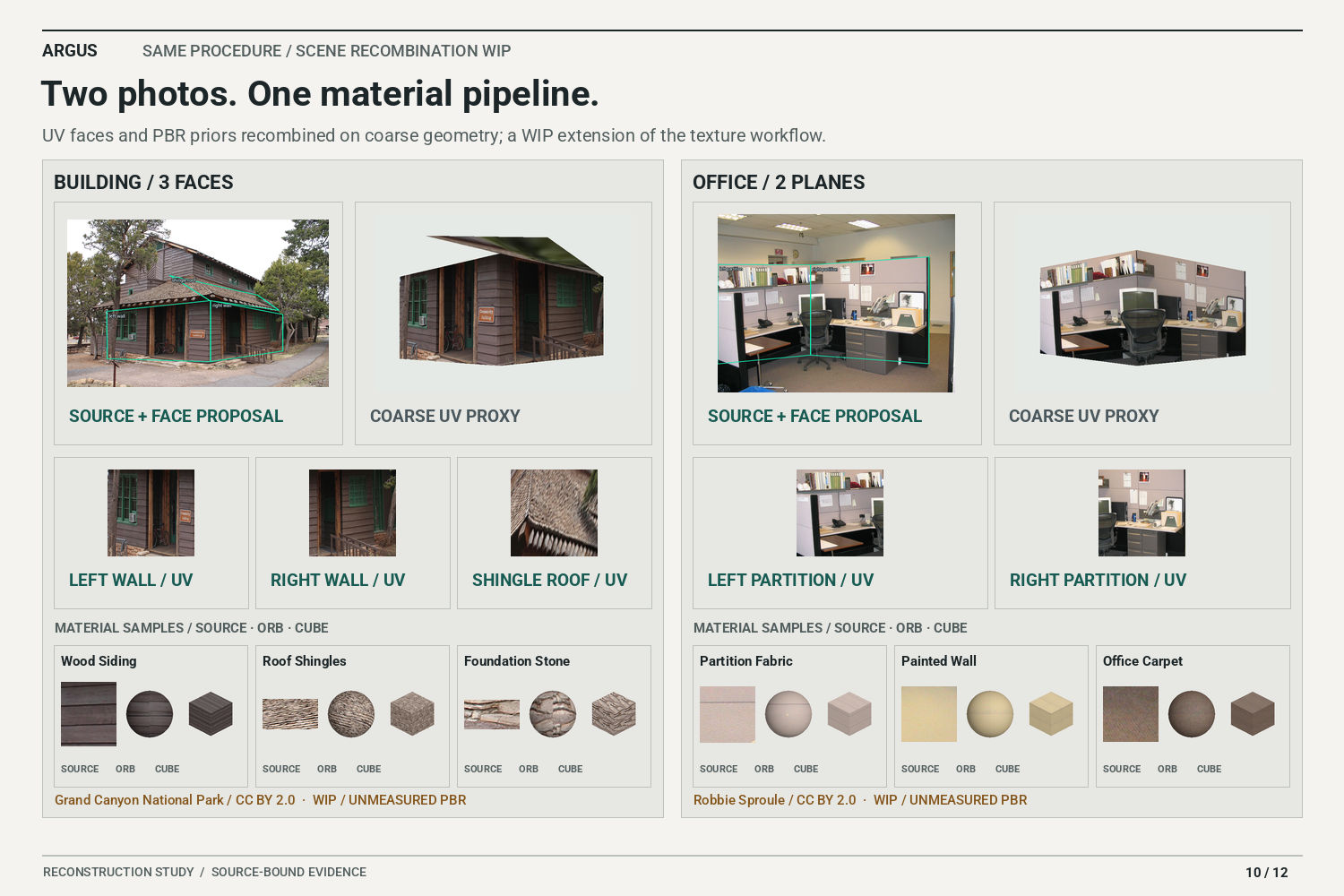 10-two-scene-extraction-wip.jpgBuilding and office photos recombine the same UV and material method on coarse scene proxies; scene assembly is WIP.
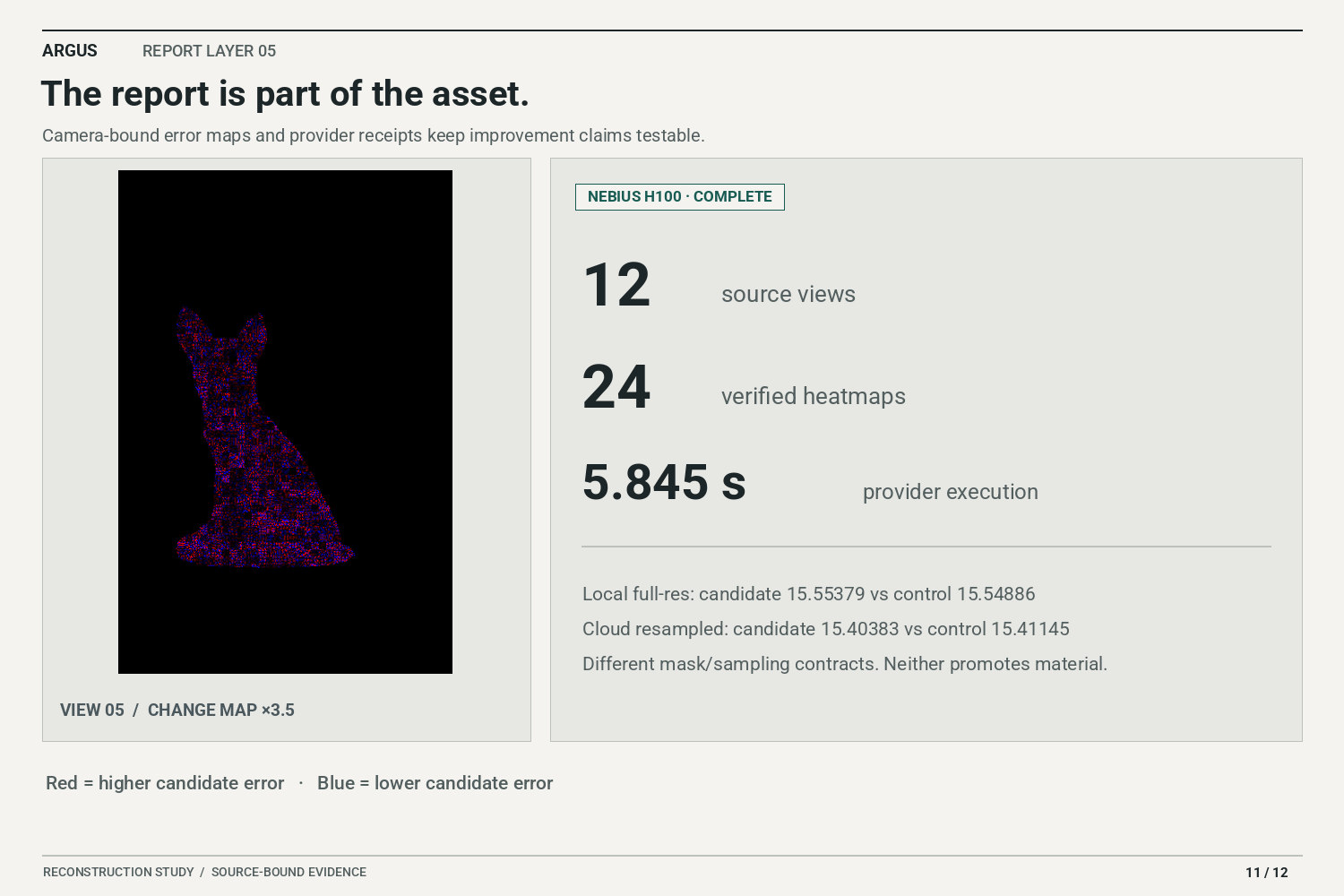 11-report-validation.jpgA Nebius H100 compared twelve saved photo/render pairs and returned 24 verified heatmaps for the report.
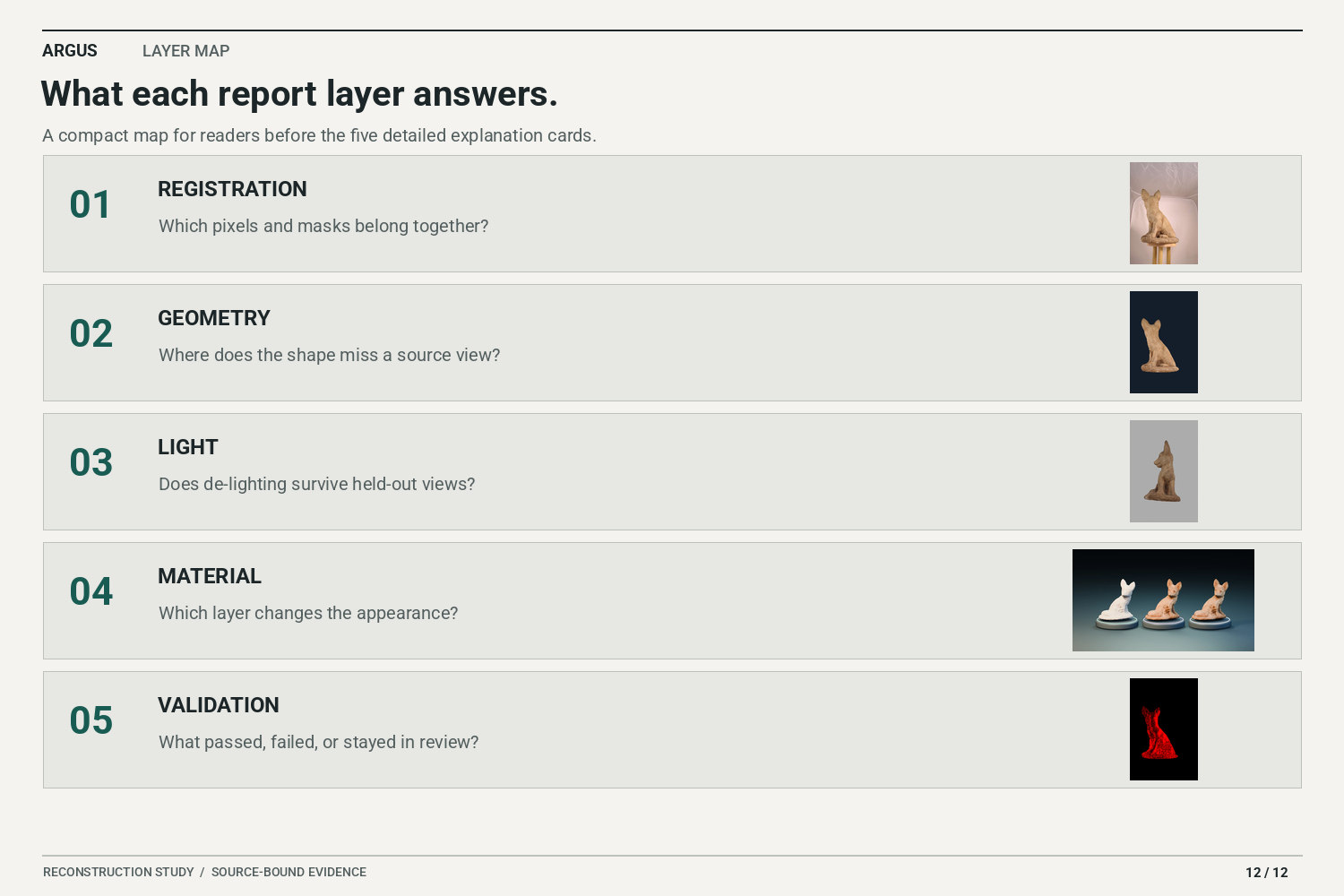 12-report-layer-map.jpgFive report layers travel with the asset: registration, geometry, lighting, material, and validation.